1 Times Table

In multiples of 1, we count groups of 1. For example, 6×1 equals 6 times 1.

Further down the page are study methods, exercises, games, and worksheets for learning the 1 Times Table.

Multiples of 1

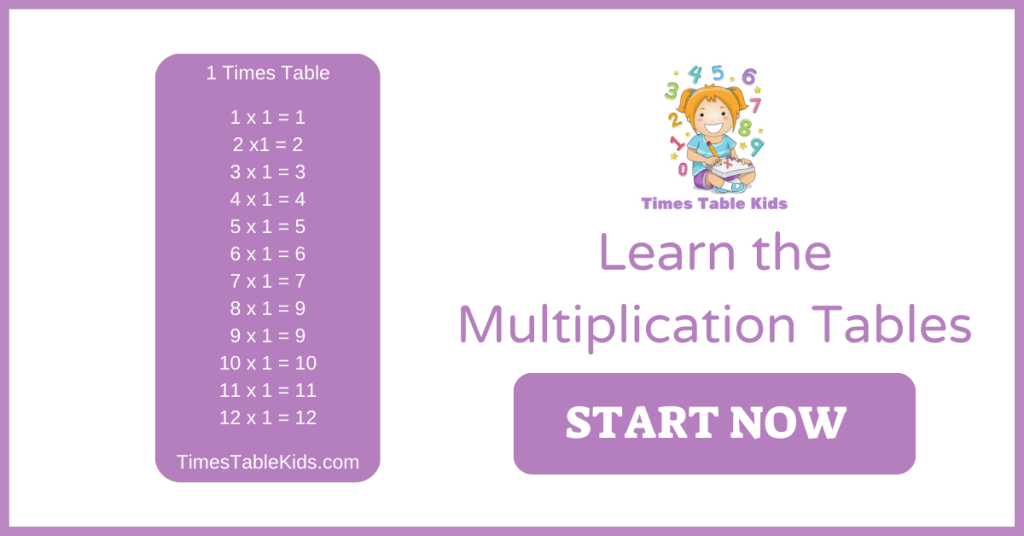
1 x 1 = 1
2 x1 = 2
3 x 1 = 3
4 x 1 = 4
5 x 1 = 5
6 x 1 = 6
7 x 1 = 7
8 x 1 = 9
9 x 1 = 9
10 x 1 = 10
11 x 1 = 11
12 x 1 = 12

Practice 1 Times Table in order

Solve the exercises. Then, click ‘Check’ to see how well you did!

If all the answers are correct, continue to practice the multiples in random order further down the page.

1 x 1 =
2 x 1 =
3 x 1 =
4 x 1 =
5 x 1 =
6 x 1 =
7 x 1 =
8 x 1 =
9 x 1 =
10 x 1 =
11 x 1=
12 x 1 =

Practice 1 Times Table in random order

Solve the exercises. Then, click ‘Check’ to see how well you did!

If all the answers are correct, continue to the memory game further down the page.

1 Times Table Memory game

Try to find the matching questions and answers in as few attempts as possible!

1 Times Table puzzle game

Drag the correct answer to each question

1 Times Table Games

Choose a game to play

1 Times Table – Quick Match Game
1 Times Table Quiz Game
1 Times Table – Match Game
Match - 1 Times Table Game
1 Times Table – Up in the Air
Air Plane - 1 Times Table Game
1 Times Table – Win the Maze
Maze - 1 Times Table Game
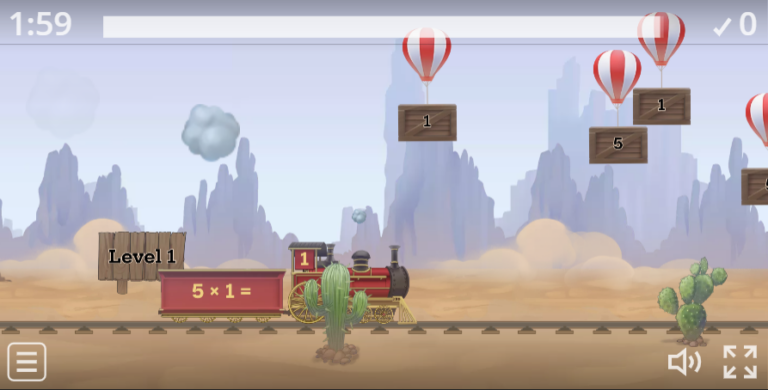
1 Times Table – Pop Air Balloons
Pop the Balloons - 1 Times Table Game

What is the 1 times table?

1 Times Table -1 ka table - TimesTableKids.com

1 ka table in Hindi

How to learn and memorize the 1 Times Table?

In multiples of 1, we count groups of 1. For example, 6×1 equals 6 times 1

6×1 = 1+1+1+1+1+1 = 6

Method for calculating multiples of 1:

Every number multiple of 1 is equal to itself.

For example, 7×1=7

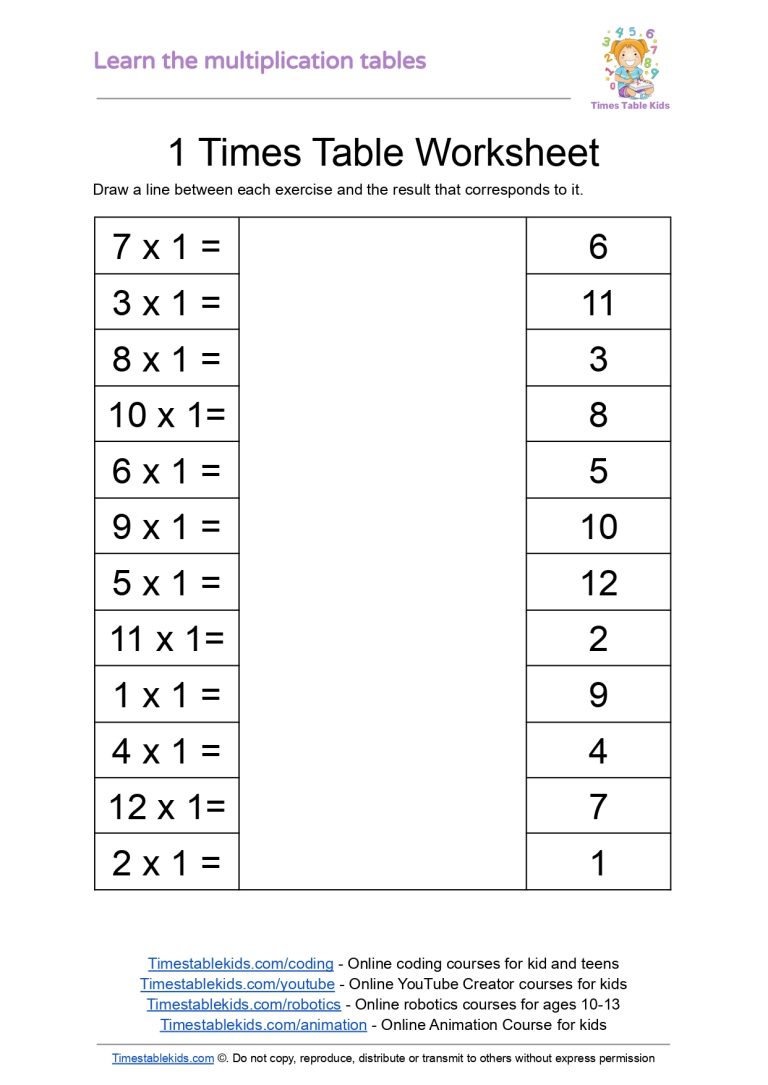
1 Times Table Worksheets

Click on the worksheets to download a printable PDF file

❓1 Times Table FAQ

The 1 times table is the simplest multiplication table. Any number multiplied by 1 equals itself. For example, 1 × 5 = 5, 1 × 9 = 9, and 1 × 12 = 12. This is known as the identity property of multiplication.

Even though it's easy, the 1 times table teaches children the fundamental concept that multiplying by 1 doesn't change a number. This identity property is essential for understanding algebra and more advanced maths later on.

The multiples of 1 up to 12 are: 1, 2, 3, 4, 5, 6, 7, 8, 9, 10, 11, and 12. Since multiplying by 1 gives you the same number, the multiples of 1 are simply the counting numbers.

Children typically learn the 1 times table in Year 1 or Year 2 (ages 5–7). It's usually the first times table introduced because it builds confidence and helps children understand what multiplication means.

Use everyday objects to show that 1 group of any number is that number. For example, 1 bag of 6 apples is 6 apples. Our page offers free quizzes, memory games, and interactive exercises to make practice fun.

No. The UK Multiplication Tables Check (MTC) tests times tables from 2 × 2 up to 12 × 12. The 1 times table is not included in the official test, but learning it helps build a strong foundation.

The simplest trick: the answer is always the number you're multiplying by. 1 × anything = that thing. There's nothing to memorise — just understand the rule and you'll never get it wrong.

Yes! This page includes free interactive games, a memory matching game, puzzle activities, and printable worksheets — all focused on the 1 times table. No account or download is needed.

Continue studying the multiplication tables

Share the site with friends

Table of Contents